
Param College
Your Path to Job Oriented Courses
Approved by NCVT, MSME, UGC, QCI, MHRD | ISO 9001:2015 & 14001:2015 Certified College
Your Path to Job Oriented Courses
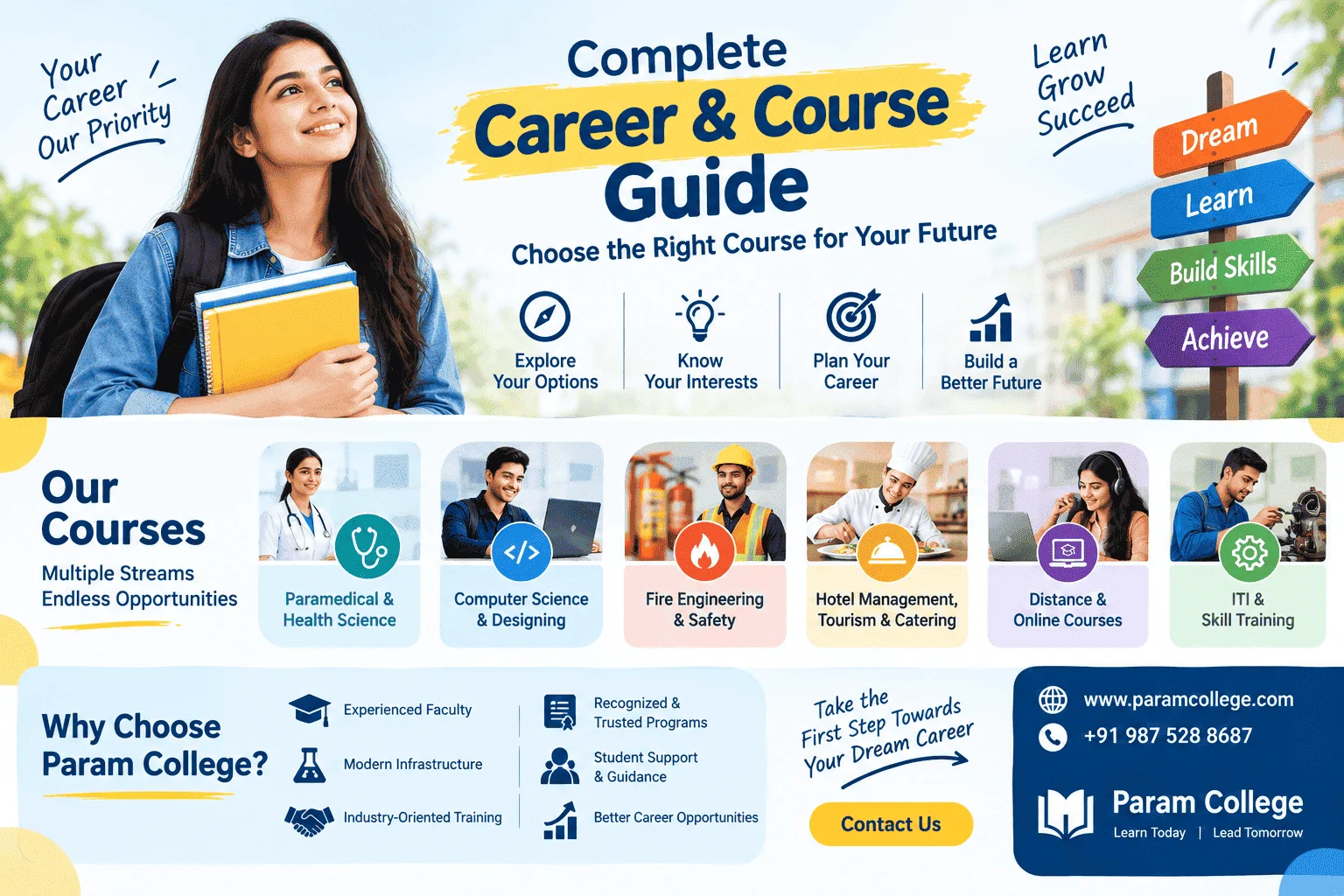
Choosing the right course after school or graduation is an important step toward building a successful career. With so many degree, diploma, professional, technical, and skill-based programs available today, students often find it difficult to decide which option matches their interests and career goals. A well-planned career decision should consider your academic background, skills, interests, course eligibility, practical training, career opportunities, and future growth.
Param College focuses on job-oriented education with practical learning and industry-focused programs across healthcare, technology, safety, hospitality, online education, and vocational training.
A suitable course can help you develop knowledge and professional skills required for your preferred industry. Instead of selecting a course only because it is popular, students should understand the subjects, duration, eligibility, practical exposure, career scope, and opportunities for higher education.
Career-focused education can also help students become more confident and workplace-ready by combining theoretical concepts with practical learning.
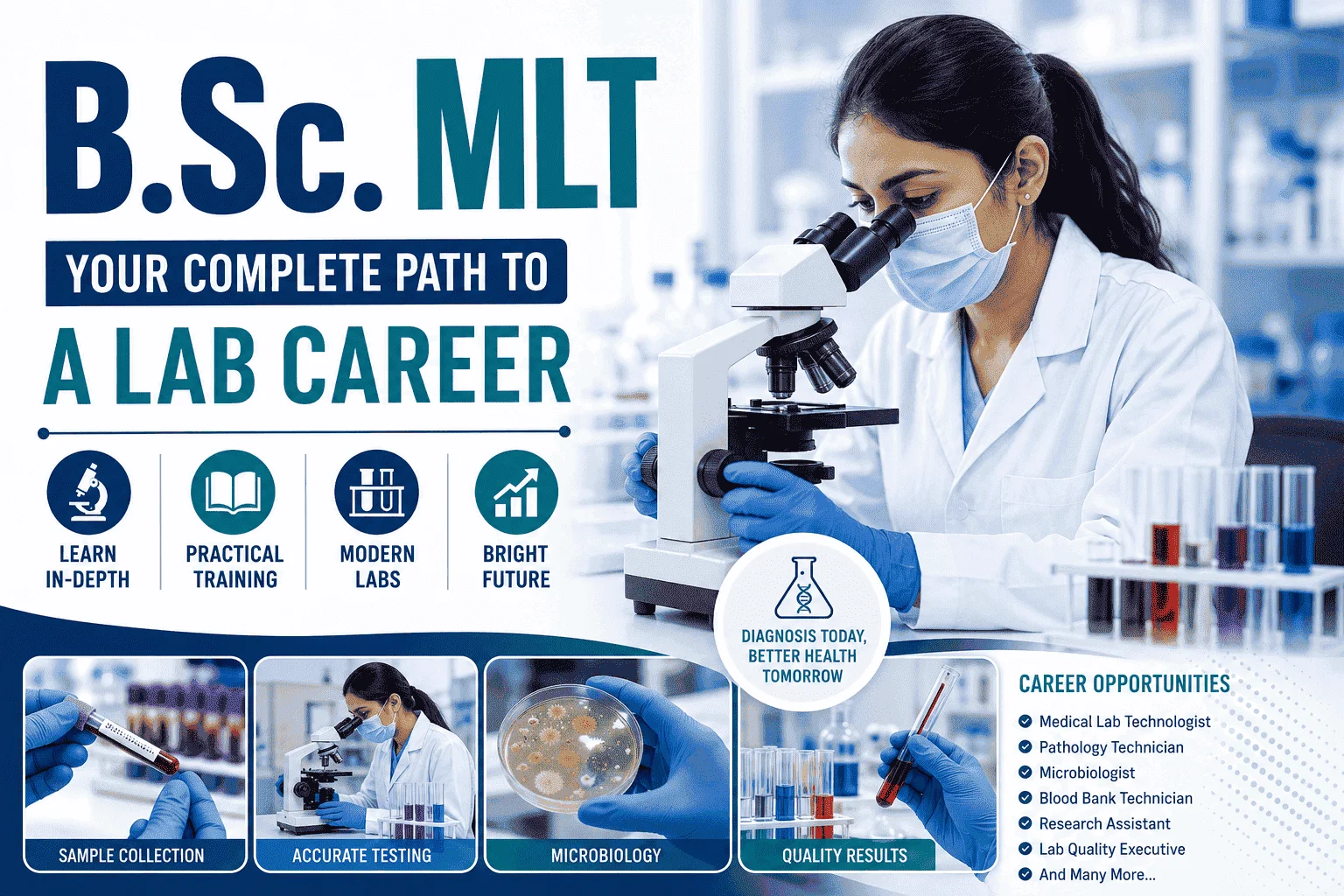
Healthcare offers diverse career opportunities for students interested in medical and patient-care services. Paramedical programs can prepare students for areas such as medical laboratory technology, healthcare assistance, patient care, and related healthcare services. Param College offers programs in paramedical and health science.
Technology continues to create opportunities for students with computer and digital skills. Depending on the program, students can explore software development, full-stack development, UI/UX design, computer applications, and modern AI tools. These skills can support careers in technology, software, digital services, and design.
Fire and safety is an important career field across industries, construction, manufacturing, healthcare, airports, and commercial organizations. Students can learn about fire prevention, industrial safety, emergency management, disaster mitigation, and risk assessment. Param College provides fire engineering and safety-focused programs designed around practical learning.
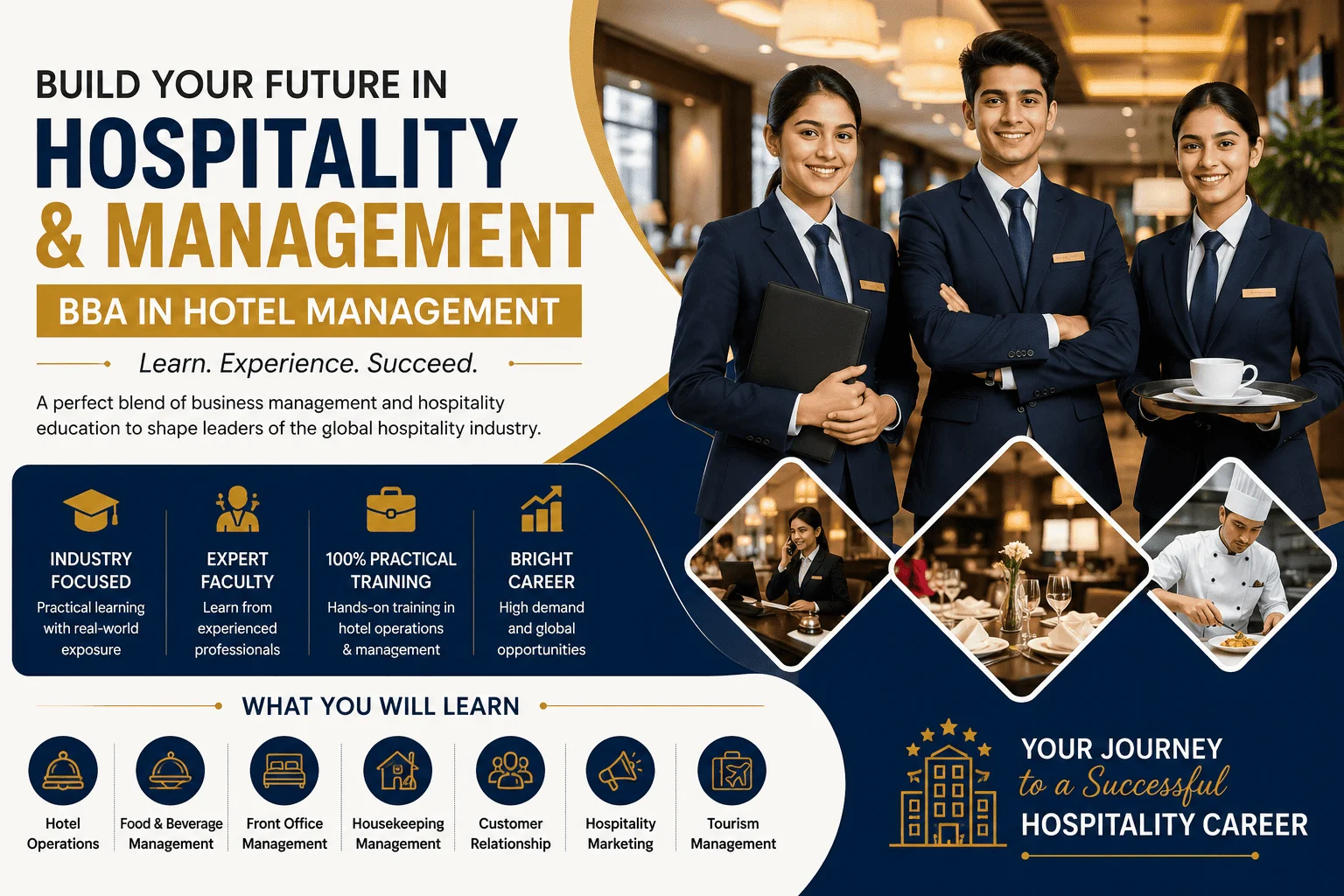
Hospitality is a suitable choice for students who enjoy customer service, food production, hotel operations, travel, and event-related activities. Career opportunities can include hotel management, front office, housekeeping, food production, catering, tourism, and hospitality operations. Param College offers hotel management, tourism, and catering programs.
Distance and online education can provide flexibility for learners who want to study remotely or balance education with other responsibilities. Students should always check the specific program's eligibility, recognition, curriculum, and academic requirements before admission.
Vocational and ITI programs focus on practical trade skills and can be a good option for students who prefer skill-based education. These courses can help learners develop technical abilities relevant to specific trades and employment opportunities.
Before taking admission, consider these important points:
A degree or certificate is only one part of career development. Employers may also value communication, teamwork, problem-solving, computer knowledge, technical abilities, and professional behavior.
Practical training can help students understand how classroom concepts are applied in real-world situations. Param College highlights hands-on training, modern facilities, computer labs, and industry-focused learning as part of its educational approach.
A successful career requires continuous learning and planning. Start by identifying your interests, shortlist suitable courses, compare eligibility and curriculum, understand career opportunities, and select an education pathway that supports your long-term goals.
The right course is not necessarily the most popular one. It is the course that matches your interests, abilities, educational background, and professional ambitions. By making an informed decision and developing practical skills alongside academic knowledge, students can create a stronger foundation for their future.
Consider your interests, academic background, skills, career goals, eligibility, practical training, and future employment opportunities.
Paramedical, computer science, fire and safety, hotel management, vocational, ITI, and other professional programs can provide career-focused learning depending on your interests.
Yes. Practical skills help students understand real workplace requirements and apply their theoretical knowledge more effectively.
Yes, depending on the program and your eligibility. Always verify the course's recognition, academic structure, and admission requirements before enrolling.
Check eligibility, duration, curriculum, fees, practical training, recognition or affiliation, admission process, career scope, and student support.
Yes. Early career planning helps students compare suitable courses, understand career paths, develop relevant skills, and make informed education decisions.
Leave A Comment
Your email address will not be published.